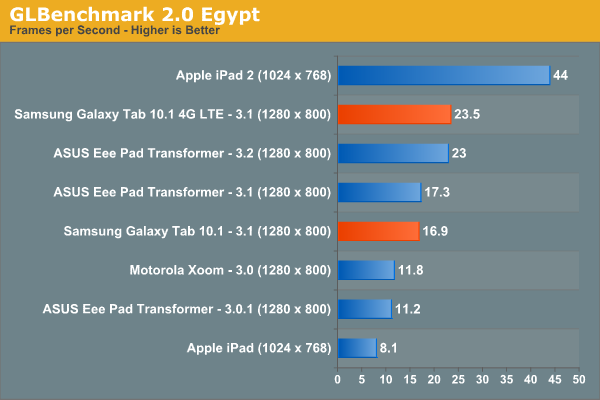
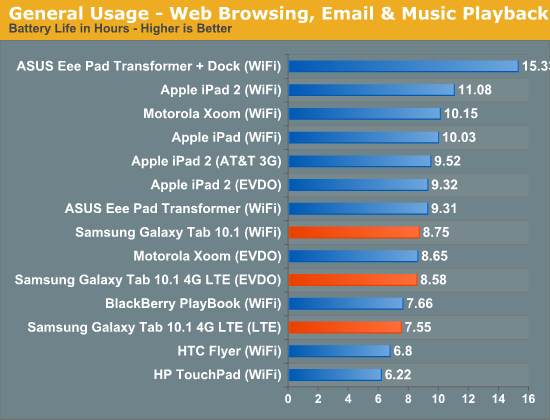
It is amazing to me that of everyone who has made tablets, only Apple seems to be successful at it. Maybe it is just like someone said recently: there is no tablet market; just an iPad market.
I don't think that's the case, but there definitely isn't a market for tablets that fail to compete on features or price.
The brilliance of what Apple has done with their mobile products is hard to overstate. They put all this effort into designing mobile chips and a mobile OS for the iPhone and iPod Touch. They took the fruits of those efforts and stuck them into a tablet format, and bam, you've got an iPad. They took them and stuck them into a set-top box, and bam, you've got the Apple TV 2G.
They get to spread the development costs of their silicon and OS over these four product lines. Talk about efficient reuse of your development investment. I own three separate devices powered by an A4 CPU and iOS operating system.
Main reason being they can't even compete on price without those fat carrier subsidies that it took to get Android for phones off the ground. They're pretty much at price parity with the market leader with a fraction of the useful apps, and surprised why they're not selling that well.
Anyone who thinks Android would be the leading smartphone OS if their devices were sold at price parity with iPhones is deluding themselves.
Similarly, if Apple wanted to overtake Windows PC markethsare with Macs (they don't) they would be foolish not to compete on price. When you are asking the user to try something new (or new to them) and non-mainstream, "pay more for this risky new thing" isn't a very attractive proposition.
I would like to see where that number is coming from. I've seen a lot of number's based on units shipped, but none on "actual" units sold. Curious what the 20% is actually based on.
It's even more efficient when you just relabel a standard chip you bought from Samsung and just tell everyone that you've put lots of effort into designing it. Works much better than I'd have imagined anyway.
Intrinsity does not "create customized ARM chips", they optimize existing designs. There's been nothing impressive so far in Apple's chips, they're pretty standard design though thought to have been optimized by Intrinsity's folks.
Innovative custom designs were expected from the PA Semi acquisition. Apparently did not pan out, since it's been three years and there isn't much to show for it.
The iPad 2 has a smaller, lower resolution display than the other tablets in those charts. Once you compensate for that it still has an advantage, but barely. It hardly leaves the other tablets "in the dust".
You appear to be claiming that this is a demonstration of how much better Apple's custom ARM chips are, when it's just a better GPU in the core, just like Samsung's Hummingbirds in the Galaxy and Nexus S used the next GPU up compared with the iPhone 4. They're all PowerVRs. It's about as technically impressive as us both buying a laptop from Dell and me buying a laptop with a better GPU than yours.
I suppose you could give Apple 10% credit seeing how they bought that much of the company that makes them (again, after starting to use their products) but then Intel should get even more credit, because they've owned more, for longer.
There's two sides to this argument and you appear to have missed the important half. Anyone can slap a better GPU on and get better framerates. Not just anyone can slap on "the next GPU up" and still beat you in battery life.
Everything I've ever read about Apple's supposed optimizations is that they have to do with power efficiency.
At least for the A4/Hummingbird, Intrinsity optimised the existing Cortex-A8 design for Samsung and before Apple bought them, so you disagree based on faulty facts.
SAMSUNG and Intrinsity Jointly Develop the World's Fastest ARM® Cortex™-A8 Processor Based Mobile Core
"Seoul, Korea, Austin, Texas - July 27, 2009 : Samsung and Intrinsity today jointly announced the industry's fastest mobile processor core implementation of the dual-issue ARM® Cortex™-A8 processor architecture in 45 nanometer (nm) Low Power (LP), low leakage process technology. This Cortex-A8 implementation, code-named Hummingbird, delivers 2000DMIPS at 1GHz. The Hummingbird comes with 32KB each of data and instruction caches, an L2 cache, the size of which can be customized, and an ARM® NEON™ multi-media extension. Performance and power consumption of the Hummingbird have been validated in silicon. Samsung is currently developing standard mobile SoC products using this new core."
At least for the A4/Hummingbird, Intrinsity optimised the existing Cortex-A8 design for Samsung and before Apple bought them, so you disagree based on faulty facts.
Your going to have tell me what you think is wrong, because I can't read minds. I can't see any problem, but I'll rephrase to see if it's just the sentence structure that's confusing you:
Samsung worked with a company called Intrinsity.
They took the Cortex-A8 design, and Intrinsity made it a bit more power efficient.
Samsung sells these chips, and uses them in their devices.
They also sell them to Apple.
Apple gets Samsung to put Apple logos on them, and refers to them as the A4.
Apple bought the company called Intrinsity after all the work on the A4 was finished, nothing they've done in the pay of Apple has any impact on the A4 or Hummingbird core.
I responded to someone claiming that Intrinsity customised the chips for Apple. This isn't true. I linked to a press release that shows this.
Asus claims to be selling 400,000 Eee tablets a month. I own one, and when I went to pick up a cover sleeve at Central Computers* lately they said the things are flying off the shelves.
I love Central Computer! It has the selection of Fry's, but the employees actually speak english and the merchandise is well lit and organized... and for that you do pay quite a premium over Fry's, but it's worth it.
edit: Care to explain the down votes? It's too early to make such proclamations. It took a while for the cellphone market to catch up with Apple, why should we expect the tablet market to be any different?
True, but the tablet market is in one important aspect different from the phone market, in that the distribution channels are vastly different. Many who buy a new phone just take what the carriers are shoving in their sales channel.
In the best case scenario the iPad could play out more like the iPod: year after year there were prominent iPod-killers like the Zune and cheap knockoffs and year after year Apple dominated the market.
iPhone didn't immediately command a large percentage of the market, the iPad does. This is much closer to the iPod situation where many companies tried to match it but failed.
For one thing it was Apple's exclusivity with AT&T that opened the door for Verizon to push Android which played a vital role in its success. Things are a bit different with the iPad being that it's offered in both CDMA and GSM and the wifi-only model is, by far, the most popular.
It's also important to note there's really only one successful competitor to the iPhone -- Android. WebOS is dead, RIM is on the ropes, HTC, Samsung, Motorola, LG, etc didn't catch up as much as they let Google catch-up and they rode their success. (my point being we can't under estimate the difficulty in trying to compete toe-to-toe with iOS as only one company has done it successfully to date)
Yes, it is really just a matter of time... and of Android tablet manufacturers finding the sweet spot between features and pricing (which ASUS has with the Transformer but other manufacturers have been iffy with thus far)... but that too is just another thing time is already sorting out.
There is no way Android represents 20% of the tablets sold this year. Seriously, I doubt it's 5%.
It's incredible that anyone can make that claim when it's patently obvious from simple observation that there are hardly any Android tablets in the wild. If they're going to pull numbers out of their ass to create the perception that Android is succeeding on tablets, they should at least make up numbers that are marginally plausible.
I'm not clear as to if you were trying for irony with that statement so I'll call you on it:
Seriously, I doubt it's 5%
...they should at least make up numbers that are marginally ...
If your going to mock someone for "making up" numbers try not to make up numbers of your own in the same post. The op provided data, you did not. Unless you were going for irony; in that case, well never mind.
I don't think it's incredible to make that claim at all. The iPad has been around for quite a bit longer so you would expect to see a lot more of them in the wild despite only outselling android tablets by approximately a 4 to one margin at the moment.
Despite this, I still routinely see android tablets in airports. I saw a galaxy tab 7" tonight (along with 3 people using ipads in first class). I've also seen a few galaxy tab 10.1s and a couple of HTC Flyers.
To be clear, I also wonder if the actual ratio is 4 to one. I just don't think the number is completely outside the realm of possibility.
It depends what you mean by successful. The Android tablets are selling reasonably well - ASUS is claiming ~1 million sales (to consumers) and forecasting 1m more by the end of the year. It ain't iPad level but it's a strong showing and it's just one tablet out of half a dozen.
Moreover, ASUS is following the Transformer up with the eee Pad Slider in September and a second-generation Transformer using Tegra 3 Kal-El (though the release-date rumors for this vary). In other words, ASUS isn't just talking the talk, they're walking the walk.
Also, two of those Xooms are gathering dust here at work. We got them intending to write Android versions of the iOS apps we were making... The iPads were fought over, but one of the Xooms ended up in a file cabinet for a few months, and the other has barely been touched either. I feel sorry for those things. The only thing a Xoom is really good for is disappointing your kids on Christmas morning.
Companies seem to give in too quickly, though. The tablet thing has only just started. Most non-ipad tablets simply sucked. Instead of giving in, they should create better tablets.
I agree. It's going to take some time for manufacturers to pull their heads out of there asses on tablets. If you want to compete with Apple, your tablet has to be cheaper. Otherwise, why would anyone buy it? And, it has to not completely suck.
We will have more data points on that 'observation' when Windows 8 launches
Sorry, but I just find this statement hard to agree with. Microsoft is forever shipping some "game changer" "pretty soon now", but they haven't managed to change any games in a very long time now.
If Microsoft, or anyone else, has some revolutionary thing, it will be interesting to see it when it happens. But I am certainly not anticipating any such event in the next year.
> "I'm beggining to wonder if MS are actually scared of being innovative."
This might actually be a pretty good summary of MSFT's corporate culture.
The impression I always get from the inside is that it's a company dominated by middle managers. They've got so many PMs in so many layers that you'd wonder if it's just PMs all the way down.
The combination of mature, gigantic company, lack of strong leadership, and extremely generous benefits has combined to create a population of people who are there for the stability and extremely afraid of rocking the boat or killing the golden goose.
Instead, they are slowly bleeding the goose dry. Granted, the golden goose is still pretty fat and could sustain them for decades without doing anything significant. As it is though, Microsoft is pretty low in the innovation front. I don't think anybody has been "wowed" by any of their products since maybe Windows XP.
If you haven't read this, this is a short article on what Apple does so differently than almost all of its competitors - never announce something before it is shippable (e.g. production-qualified and vetted, supply chain and all)
Yeah yeah, but "Tablet PC" is not the same device as we mean today when we say tablet. And also, I guess by "successfully making tablets" you mean "being the only mfg who bothers with the incredibly tiny niche of Tablet PC buyers consisting of warehouse operations, hospitals, and about 20 really nerdy college students." And even then, much of that niche may in the future go to "real tablets" that run mobile OSs instead of Windows XP/7. For one thing, "real tablets" in the modern sense cost about a third of those huge pen-based Windows things.
Correct, no true Scotsman has three heads and an integrated espresso machine. Likewise, the Fujitsu tablets have nothing in common with current iOS/Android devices.