I live in Bangalore, one of the cities which is primed for water depletion. In fact, there are areas where there is no drinking water supply at all and water is ferried by trucks (locally called water tankers). Now these trucks ferry water from God knows where but most likely a fresh water source or a borewell. Most of the neighbourhoods in my city are fed by these borewells some going as deep as 1000ft. Some neighbourhoods don't find water even at those depths and they have to depend on these water trucks.
Now I'm not talking about a few hundred or thousand people I am talking about hundreds of thousands of people who live like this. The prime IT areas are all water depleted already.
There is this notion amongst us Indians that things will improve somehow and we will get by. What they don't realise is that the politicians won't give a damn, when water depletion hits critical levels. In fact these water trucks are run mostly by politicians and their local goons.
The ground reality in a city like Bangalore at the very fundamental liveable parameters is horrible and getting worse day by day. This year rains have been below average so we are staring at a water shortage next year even in areas that get fresh water from the regular water supply.
Honestly India already has a solution for this that is not being implemented fast enough. The monsoons every year provide more than enough water to supply India for years every season, most of it just ends up in the oceans. India has to massively invest in catchment. There is some of this happening but it needs to be on a much larger scale.
Rain water harvesting and catchment - while in theory this is a solution, it has not been implemented in any major city at a large scale. For instance in Bangalore, around 200,000 households have implemented rain water harvesting. Why is this ?
Implementation problems - The process and procedure is not as straightforward as 'dig a hole, put some gravel and you are done'. In fact, if you don't follow the correct protocol, you will screw up the ground water table.
Lack of standards - I am yet to come across a protocol and standard for implementing RWH. Every RWH expert has their own protocol. In fact, someone as famous as Aamir Khan touted a revolutionary process of RWH, which proved to be disastrous for the water table.
The consumer need or want - This is the most impactful reason in my opinion. The water crisis is not in your face, it is not an impending problem. Also, having your own source of water or implementing RWH is not something you can flaunt and show off. Perhaps why people spend so much on the apartment/house and so little on RWH. Had there been a consumer need, private enterprises would have swung to action. We probably would have a Swiggy'ish startup solving RWH here.
Corruption, let's not forget the politician driven agendas for not enabling self sufficiency in water supply. If the water problem goes away, that tool is no longer available for elections. Yes, water crisis is a political tool and is a pretty big one. The farming community almost always is driven by this tool to decide whom they vote.
So, yeah while in theory everyone should implement RWH and the water crisis will be solved, this theory does not hold any water in practice. We need a herculean effort driven either by the govt or a non-profit to bring about the awareness in people. Once the consumer need is established, private enterprises will take care of the rest.
Why were those methods disastrous for the water table? On the surface it sounds like a pretty straightforward solution. Hold the runoff until it seeps into the ground.
Yes, I've seen some good articles about how just some basic terraforming can make a huge difference of how much ends up in the aquifer. A bit more could really help.
Though monsoon patterns may change with climate change too. There are some forecasts that have India much much drier by 2040 where the water is needed most[0]
What is all the more tragic is, Bangalore gets ample rainfall and stricter implementation of rain water harvesting is one remedial solution. Though local authorities mandate compulsory rainwater harvesting for newer residential construction the implementation is quite lackluster in practice. During house construction people spend fortune on interior decoration, but loathe to spend money towards water conservation and harvesting efforts.
It is my understand that once an aquifer is depleted, there is no going back. The relevant strata collapse and become unable to carry water. So there is probably no way the situation can improve.
The geography of South Korea seems to help. Typhoons collect into snow on the rocky mountains, that melt throughout the year into clearly defined rivers without much penetration into soil. There is an ecological buffer that some parts of India don't have to maintain levels of drinking water throughout the year.
Yes, but they are still 50M overall. They maintain that quality of life by supplying the rest of the world with much of its cars, electronics, phones, and other crap (including pop music and movies). You can't do it at a size 30 times as large, or you'd need an entire solar system as your market.
You're implying that humanity net overall has a fixed output and the only way a country can do well for itself is at the expense of others. Technological, infrastructure and agricultural improvements, and more efficient use of resources make the whole "pie" bigger for everyone, and don't require being a top 10 economy relying on a resource rich 3rd world.
India’s current development strategy is unsustainable. There is large scale migration to a handful of major cities while the interior of the country gets hollowed out. There are so many cities with millions of residents and their population is only increasing.
The worst part is that we don’t even know what the population distribution is like now because the census hasn’t taken place since 2011.
India needs far more cities and it needs to distribute its population across a wider geographical region.
Concentrating the population in a few areas is actually pretty good for the environment. It leaves room for nature and infrastructure becomes cheaper to build and more efficient to run.
The environmental impact is still number_of_individuals * mean_consumption.
Urban areas often use more resources and generate more waste due to higher levels of economic activity. This contributes to a bigger environmental footprint.
Cities can also shift some of their environmental impact to rural areas or other states or countries where things like food production, resource extraction and waste disposal happen.
So, the true environmental cost of cities is often higher than it appears, especially when you consider the carbon emissions from transporting goods and waste.
The environmental impact of Addis Ababa, Ethiopia, and Los Angeles, California, will differ significantly, even if they have similar populations and technology levels. When it comes to meat consumption alone, citizens of Addis Ababa consume approximately 5-10 kg per year, while in the USA, it's about 125 kg per year.
The difference in consumption, or affluence, is the critical parameter here.
Distributed sustainable communities seem like a better balance than a massive metropolitan city that destroys not only its local habitat but many far away ones for the raw materials to build and sustain the city.
All of those people are you to live somewhere and that is going to require building and gathering raw materials. This is true no matter where they live. Those raw materials are getting used.
Given that people in cities live in smaller homes without yards, drive less, and are also more likely to not own a car, it’s gonna take some evidence to prove your hunch here.
Yes - economies of scale. Even if water has to be brought in from a distance, it's better than if some of the population actually extended out to that distance and got their water locally from the same location.
Yes, electricity for water pumping is subsidised, and the water itself is not taxed.
Imposing even tiny charges on water consumption by farmers would incentivize them to use water more efficiently. India could easily learn water efficient practices from Israeli farmers.
It may triple due to a lot of things, which can include climate.
The economist has article on urban development which makes me think at least part of the problem is population growth, in particular the 3rd picture showing the population growth.
https://www.economist.com/asia/2023/08/14/how-to-fix-indias-...
Groundwater depletion would create major disruption (as unrests and wars). This is literally a vital issue. Every country should take it seriously as matter of national security.
I still think that the impact is not fully grasped. And it might be due to human nature, to only believe what we can see and measure.
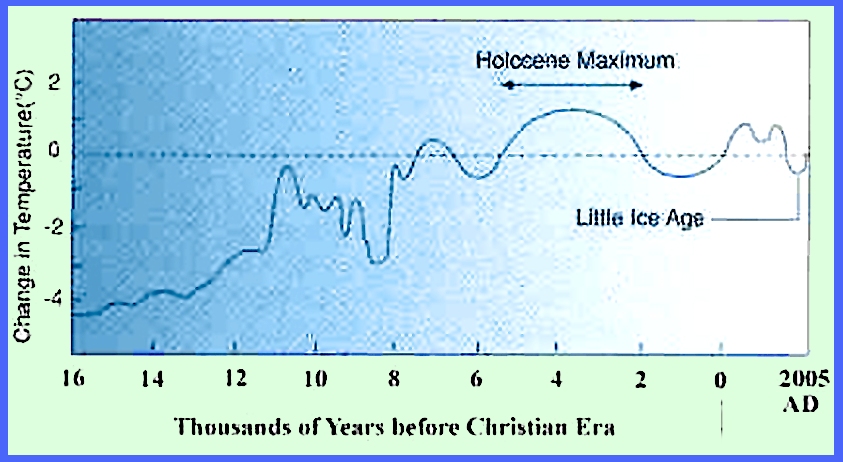
If we tell, "you might get +2 degree Celsius in 2050". Most people cannot relate. Even if we say "+2 degrees is what happened 10,000 years ago, and made earth suitable for human growth (settling, agriculture, etc.)" We have been in that sweet spot (holocene) for 10,000 years, in a mere century we are going to depart from that sweet spot and make earth not suitable for human growth.
"..the CO2 concentration in the air has stayed the same for the 10.000 years that preceed 1750, and have never gotten over the 1750 value (280 ppmv, and today we are at 350) fort the 400.000 years that preceed 1750.
Actually, for these 400.000 years that preceed 1750, the atmospheric CO2 concentration has oscillated between 200 and 280 ppmv (graph below)."
Source: Petit & al, Nature, June 1999
We are impacting the climate in a way that would take decades to appreciate the impacts. And the inertia is such that paper straws, or EVs are not going to make a dent. Every country should see it as a national security issue.
We are at war and we do not know it. Every country should switch to war economy, and focus on the sustainability of its own economy. With a postulate that fossil fuel is going to end (effectively because we extract faster the fossil fuel is naturally produced), and that the whole economy would have to do without it. It requires to rethink the entire economy as everything is either made of, or made by fossil fuels.
neither arid India nor the north of China had enough water. China may hope to achieve some strategic control over the big Baikal Lake's reservoir in a near future probably.


Now I'm not talking about a few hundred or thousand people I am talking about hundreds of thousands of people who live like this. The prime IT areas are all water depleted already.
There is this notion amongst us Indians that things will improve somehow and we will get by. What they don't realise is that the politicians won't give a damn, when water depletion hits critical levels. In fact these water trucks are run mostly by politicians and their local goons.
The ground reality in a city like Bangalore at the very fundamental liveable parameters is horrible and getting worse day by day. This year rains have been below average so we are staring at a water shortage next year even in areas that get fresh water from the regular water supply.