Edit: This was a reply to Kunai, asserting that gluten is an inflammatory agent.
I'm married to a woman with a dietetics degree. We have discussed this subject. She has read papers on the topic, and knows the literature.
You, I am guessing, are a software developer, who, in all likelihood has not read the literature on this subject (if this assumption is incorrect i would be happy to stand corrected).
It mystifies me how people stand so sure of themselves and claims such as "gluten is an inflammatory agent", despite the fact that grains have been consumed by vast numbers of humans for millennia, the absence of evidence that it causes disease, and the fact that no causal links have been proposed between gluten and causing Celiac disease†.
†: my wife says that if you are strongly predisposed to Celiac (which has a genetic component), then yes, consuming gluten may exacerbate your condition. However the idea that you can take an otherwise healthy (or heck even unhealthy) person, force them to gorge on gluten to give them Celiac is definitely wrong.
My genetic markers for gluten were negative, but I do have IBD, and consuming any gluten at all usually causes a marked exacerbation of my symptoms. I am not well-versed in dietetics; although my parents are both physicians, and have seen many patients with Celiac disease and a predisposition towards gluten sensitivity, whereas 20 years ago there were very few. Other physicians have asserted similar stances.
It's not empirical, but if you have any evidence that suggests otherwise, I would gladly be corrected.
When it comes to the medical literature, I'm even cautious about doctors claims. Dr. Oz is a doctor, but he's a cardiac surgeon. So when he makes claims about the healthiness of palm oil (which is solid at room temperature, and is only healthy by comparison to lard), he is abusing his credibility as an MD.
You'll note in the epidemiology section that Celiacs to genetics. The disease is prevalent primarily in western european populations (or populations descended from western europe), and has actually shown a decrease in non-european descended populations.
(My wife also notes that in the Infant Diet section it does say that if you feed gluten to infants it can increase their chance of Celiac's. This is true if you have genes which predispose you to Celiac's. If you do not have the genes, you can't develop Celiac's. And even if you do have the genes, you can go throughout your life w/o developing Celiac's, although apparently being fed gluten early in life does increase your risks. Seems more like a thing about feeding infants than it does about gluten really.)
Edit: My wife also points out that Celiacs diagnoses prior to 1997 were done via biopsy (which is of course, invasive, when we're talking about intestines). After 1997, and the availability of a simple blood screening test, testing for Celiac's has become cheaper, easier, and more prevalent. That certainly must contribute to the increased number of diagnoses.
Well, lactose intolerance and gluten intolerance aren't dieting fads. I silently sneered at those labels, until I realized 6 years ago that I might have been lactose intolerant for the prior 10 years. (Now I know so.) And I felt the same way about gluten intolerance, until... 1 month ago. Now I realize that I have gluten intolerance. My intolerance for lactose is fairly strong, and for gluten, it's fairly weak, but now I know why I get stomach cramps and breakouts on my lower face. 75% of the world has at least some degree of lactose intolerance.
Bread (and others) have provided the fuel to build civilization, true. However, they are man-made foods. When was the last time you saw a chimpanzee or caveman enjoying a loaf of bread, plate of pasta, etc?
As it has only existed since the dawn of agriculture, your tying of it to evolution is incorrect.
I'm going to stop you right there and say that evidence is empirical.
I'll believe personal experience and observation over some conclusion from a published paper that used obscure statistical methods, possibly lied, got paid to publish a pre-determined finding and found a 2% significance of some occurrence of something with some caveats thrown in.
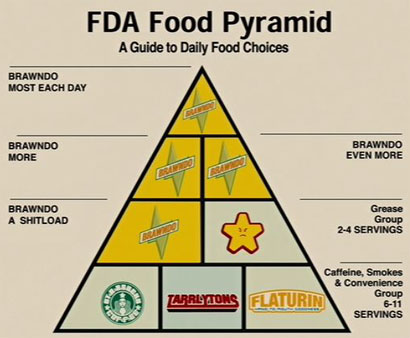
The ADA has no interest in preventing or curing diabetes as curing diabetes would end the institution. The AMA isn't interested in getting people healthy and proper treatment because that would eliminate the need of such an organization. The only reason Snickers isn't in the food pyramid is only because people aren't that stupid... yet.
You're both wrong and mongering conspiracy theories.
Sure, the Academy has its flaws, and there are bad actors who are out there just for fame and money who will lie to enrich themselves. But that's doubly true for the "health food" industry and people who claim to be nutritionists.
Humans are terrible at introspection regarding health matters. Absolutely horrible. This is one of the reasons why double-blind test protocols exist.
And so, even if you are so paranoid as to think that the American Medical Association is engaged in some mass conspiracy to keep people sick, unless you are also writing off all health care researchers, you've got to admit that there are people who are trying to help people, and help cure disease (which lets face it, we're actually pretty damn good at, all things considered).
> I'll believe personal experience and observation over some conclusion from a published paper that used obscure statistical methods
Then you are in good company. There are many reports of villages complaining about wireless towers causing headaches and other health issues... even when it later turned out the towers were not even active. I read an interview today with Bill Gates, who noted that one of the biggest problems the Gates Foundation has encountered in its efforts to eradicate certain diseases is that 10-20% of the people hear rumors of vaccines being bad and refuse to take them.
I'm a bit confused by your statement; are you saying you trust your own experience (sample size: 1) over any published science? That seems fundamentally flawed.