As someone with the authority to make the necessary changes to our office environment, it frustrates me to read these kind of blog posts. I have read a couple dozen similar posts which merely complain about open offices, but offer absolutely nothing in the way of practical solutions.
We don't have the opportunity or space to give everyone their own dedicated office, and cubicles I'm sure would be a living hell. I've looking into draping fabric from the ceiling, but you'd be surprised how challenging the logistics of setting something like that is (there are very few products in the market to support fabric like this, and we can't drape them from the drop ceiling due to weight). I've looked into free standing walls, but they tend not to have the sound absorption that is typically desired.
I'd like, for once, to read an article about practical solutions to this problem rather than just another person complaining about open office spaces thinking they've stumbled upon some undiscovered idea.
As much as I think I'd like my cubicle to be tall enough to have a standing-height monitor (so, ~6'), I also have heard it's important to have line-of-sight to something "far" as in 20 feet or more away, and suspect that too-tall walls would also make it too dark.
This is a very interesting comment. I won't work open office (have found a new job specifically to get out of that environment) and all the cube jobs I've had over the years have had very high ceilings. I wonder what it would be like to work in a 6ft cube with only 8 ft ceilings, perhaps in a very tall skyscraper. I have a window cube right now and can see the sky from my chair, pretty nice and that takes care of the 20 foot rule...
I think you're right in that there's no cheap, quick fix here. With tech companies so flush with cash/funding, can they really not afford to do something? I don't think cheapness can describe what's going on.
This is immensely frustrating because it is clear the OP doesn't have the money. So how do you do this if you don't have money for anything but Lucite tables and chairs?
You don't. You set up your open plan office, and you take what employees are left over after the ones who are skilled enough to have their choice of working environment. This is still quite a lot of very skilled employees. Leverage them as best you can to make enough money to give them offices.
Our solution is to keep everyone remote till we can build good spaces, however that is not possible for everyone. It seems ridiculous that people think there are only binary options here.
I personally would be fine with an open office if it were truly quiet. A monastic level of sound courtesy. No talking in the main room. No phone ring tones. No desk phones or phone conversations. Put sound isolated phone booths somewhere for calls. If there are doors or elevators nearby make sure they don't bang or beep when used.
I used to study in a big open, well lit room at the university library that was filled with people, but very quiet, and it was fine.
You would have to establish a culture of seriously chewing out people for making noise. The problem is, introverts are not likely to do that.
The only other factor is everybody has to have a proper wall to their back. Something in the mamillian brain freaks out when there are people moving about at your six.
I've encountered the "truly quiet" environment a few times, and really found that the worst of all: Every noise of the most meek activities, from the clicking of a mouse button to the quiet clearing of a throat, rings throughout the area. After you realize that, concerns that your own minor noises are irritating others puts you on edge, as you try to click the mouse button as softly as possible, ignore that tickle in your throat, etc.
If there isn't good sound suppression, I've found the best alternative is sound camouflaging -- the HVAC fans always distributing noise, or even something as ridiculous as an area fountain. Something to make a base level of white, ignorable noise that stops you from focusing on the small noises.
I agree that absolute silence is a bit stifling. The spot I'm working in currently is very quiet and I actually prefer when the HVAC kicks on and covers up all the little sounds (mouse clicks, chairs creaking, etc.) with a base layer of white noise.
This is immensely frustrating because it is clear the OP doesn't have the money.
Many organizations pay headhunters tens of thousands of dollars for a hire. Each person costs $100K+ (often significantly more) fully loaded. Yet somehow the price of some tall cube walls is the issue? It's flawed math, people scrimping on the environment and then maximizing head count, getting less out of the latter by cheaping on the former.
This is hilarious because in other places you'll hear that salary is the most important thing and that as long as you're getting paid well then nothing else matters.
Main takeaway: Find the best people who will work for the salary and environment you can offer.
And the corollary is probably that it was exactly because private offices and cubicle walls are expensive that somehow open office formats ends up being branded as a "cool" way to work.
Kind of like small apartments when advertised for rent or sale are never "small" they are "cozy".
In other words, you don't have the authority to make the necessary changes.
For best results, a commitment to private offices and natural light must be taken when office location is being chosen. It generally requires CEO level commitment. I've been lucky enough to work for a company that had this commitment. It was wonderful.
I think you chose the least cheritable interpretation of this person's post. My guess is that they have the "authority" but probably don't have the resources, aka the majority of startup founders.
Your company was probably also very well funded ($>500k) if it could pull that off.
If you don't have the resources for a proper office, you probably have fewer than 10 people, so you're probably in a situation where the advantages of open plan outweigh the disadvantages.
If you're paying salary to more than 10 people, you have the resources to pay for proper office space. Without proper office space, you're pinching pennies but burning dollars.
The deal is: If you provide a crappy work environment, there had better be other compensations (interesting projects, money, great cow-orkers, etc.) or I'm going to leave. And I have done this, with no regrets other than feeling bad for the people I left behind (some of whom I try to recruit).
And at some point, when a project is done or someone really good bails for a better place, people "wake up" and realize they've been had, and the exodus will start. And you'll be left with cheap digs and the people that haven't left might not be the people that you actually want, and the decline will start.
Being cheap is its own reward. I'm actually okay with cheap, cheap is great stuff when everyone is on board with being cheap, but I'm not okay with people telling me stuff like "This space is designed for collaboration and empowering communication" when the first design goal is actually cheap, and all that other stuff is just post-facto justification for a work environment that is noisy and sucks hard for people who need to think for a living.
That makes sense in a library. Usually studying is a single person activity.
However I am sure most software engineering / programming jobs require programming, as well as discussing the problem. That's a fairly essential part of the job, and you can't expect to do that in quiet.
To me the ideal solution would be a library at work. I worked in an academic institute that had one. We had 5 or 6 people in an office. Fine for normal work, but if I needed to concentrate and read up on something new, I would go to the library, and get the silence I required.
Really, what school did you go to? The main reason to go to the library to study was because there would be other people from your class studying there too. So lots of collaboration, working through problem sets together. Yet it managed to stay quiet.
At the school I attended, the quiet parts of the libraries were the parts where people were studying alone. The places in libraries where people studied together (small rooms for studying or larger open rooms with lessened sound restrictions) tended not to be quiet at all.
This is a cultural thing, though. Since childhood, we are taught that you are absolutely always quiet in a library.
Open office plans tell a very different story (with the OP underscores--collaboration), so I suspect it would be a long, difficult transition to move from a noisy, collaborative space to a quiet place.
In a lot of cases, not even possible. Maybe it's different if you're at a web startup that pulls the "we don't have a phone number, email us for questions," but part of my job is fielding technical calls and providing design guidance for clients over the phone.
I sometimes feel bad about being on the phone with other people trying to work in here, but that's the nature of the open office. At least we have low partitions.
The main problem with open offices is noise, not line-of-sight; specifically, the noise of conversation, because we're always trying to make sense of it, which prevents any other kind of intellectual activity.
I think I would prefer working in a sewing factory with the sound of machines, than in a semi-open office where I can hear people talking. (I have worked in factories for short periods of time when I was young, and mostly kind of enjoyed it; I have worked in many open offices for extended periods of time and have always hated it).
So, what about solutions?
Let people work from home (save $$ and save the planet at the same time!)
Buy office space in less expensive parts of town, or less expensive towns.
> the main problem with open offices is noise, not line-of-sight; specifically, the noise of conversation
It's related, because we are visual creatures.
When you block line-of-sight, those people who would have otherwise conversed loudly across the shared area are more likely to take it to a breakout-room or to use quieter, digital means.
I'm not sure if you are, yourself, but hanging fabric would actually block a lot of noise - it would cut down on noise reflecting from walls, and reaching you to begin with.
It wouldn't make things silent, but it would change the acoustics significantly.
I'm not. It would maybe "change the acoustics" but what is needed is to make your (nearest) neighbors' conversations unintelligible, not reduce the overall amount of "noise" as measured in db.
Noise is not the problem per se -- noise is what people put in their headphones to block out intelligible speech.
I would take a cube farm (with decently high walls) over an open office any day, all other things being equal.
Saying you don't have the resources is a bit of a cop out, IMO. Pretty decent cubicles can be had for $1000-$3000 per person. For a tech company, it's the same ballpark as what you paid for people's computers. They take a little more space, but not so much extra space that it should be a big deal. If you lease 10k square feet, get 11k instead.
And not having the money is even more ridiculous for some of the larger companies using open floor plans. Google, Apple, Microsoft, etc., all have the money and the resources.
Here's (part of) a solution: Let people work from home.
I have to work in a loud, noisy, open plan office with barely enough room. At home, I have a nicely decorated, well set-up, spacious office with all the equipment I need, sitting unused.
If you let people work from home, those that want to get can quiet, isolated environments in which to work. The people who still want to work in the office can do, and they now have more space. Plus, you can now hire people remotely from other areas of the world, rather than just a few miles of your office.
1. Noise -- ironically, I can concentrate in a loud coffee shop much better than in the open office, because the sounds of the former blend into a general din, while in the latter, various conversations grab my attention. There seems to be a desire to eliminate noise with barriers or whatnot, but I wonder whether that simply exacerbates the problem by making the conversation next to you that much clearer.
So perhaps one counterintuitive suggestion is to make it _louder_. Pipe in music, get an espresso machine and a cash register... ;) (I'm half joking here, but I'd be curious to actually try this). Some have suggested white noise -- I have a DOHM machine at home that's great: http://www.amazon.com/Marpac-DOHM-DS-Natural-actual-Machine/... -- not sure how it'd work in an office, but might be worth an experiment.
2. Free standing walls or movable screens might not block all noise, but still may be worth a look -- I think they may give people a bit more sense of privacy and help reduce visual distractions.
3. Breakout areas -- separate those needing to discuss things from the rest, or vice versa. Having options is nice.
4. Culture -- you can foster a culture that respects people's need for concentration. Favor async communication (email) over direct interruption when possible. Requires some discipline, but is possible.
Finally, what I've found most frustrating is the feeling that despite years of complaints about open offices, nothing has changed and nobody seems to care. Even if items above are only partial solutions or placebos, they might at least give the impression that someone cares and is trying to help. That, in and of itself, is worth something.
> Finally, what I've found most frustrating is the feeling that despite years of complaints about open offices, nothing has changed and nobody seems to care.
Perhaps that's because the extroverts are the ones at the top of the org chart? The best counter-example I can think of is Microsoft during the Bill Gates era.
That's a rather bold assumption. I bet if you just asked employees, you'd get mixed responses. The best part about cubicle walls is that they're easy to put up and tear down. Why not let team leaders choose whether or not to have cubicles for their team (with team member input of course)?
(Full disclosure, I work for The Lighting Quotient)
A generally overlooked factor in the open plan is lighting. When you dump a bunch of desks under a grid of 2x4 troffers or direct/indirect pendants, it becomes a very impersonal space. And the employees all know their offices went away as a cost cutting measure, the "promoting synergy" talk isn't fooling anybody.
One of our product lines is Tambient (contraction of task and ambient), a series of light fixtures that take all the lights out of the ceiling and attaches the general lighting to the office furniture. It won't solve noise problems, but having a light that's yours gives back some ownership of your personal space. It gives you personal dimming too, so you have some control over your environment instead of dealing with whatever the overhead pendant wants to do to your area (and the 8 adjacent desks).
Really energy efficient, works with benching or panel based systems (we even have one that mounts to VESA arms), and looks great too. A couple of pictures and our quick start guide for reference:
I think I am in your same position in that I have the authority (CEO/Founder) but not the money. Our solution is to keep our workforce remote until we can afford the right office spaces.
This might not work for everyone but so far everyone is happy with it.
Let them work at home. With the ones who cannot work at home or remain at the office anyway, you'll have a lot more space per person to implement offices.
How about telling people that they should treat the office area as if they were at the library? Well kept libraries are fairly silent places because everybody knows that they should keep their voices down and not unnecessarily disturb the visitors.
You could lead by example by keeping a low voice and going to a meeting room if you need to have a long discussion with someone.
Your superiors probably wouldn't be fond of the idea. Whispering isn't natural to them and having them adapt to the programmers, which they out rank, would be tough.
Don't know if this will ever be read since it seems this post was flagged off the first page or something, but:
> As someone with the authority to make the necessary changes to our office environment,
I'd say that is a bit of a stretch. The older I grow the more I try to point out that I cannot be given responsibility without authority. If you aren't allowed to
* get some kind of silent offices for those who need it
* or agree with people to work remotely
then you don't have "the authority to make the necessary changes to our office environment", do you?
> We don't have the opportunity or space to give everyone their own dedicated office,
That sounds reasonable. Have you considered trying to balance the advantages so that dedicated office doesn't also mean nice view, status, etc etc? E.g. "That end has open floor plan, coffee machine, gets new gear first and has a nice view. The other end looks straight into the industry but has single or double offices."
For some of us the point about an separate office isn't the status, -my last office looked straight into two containers and I was really happy because that meant nobody needed that office.
> and cubicles I'm sure would be a living hell.
There are quite a few ways to do cubicles wrong, yes. For a lot of people I guess they would be a whole lot better than a similarily bad open floor plan.
1. Rearrange people to try to match similar "cultures" of interruption and speaking-at-desks. The first step is usually separating the salesfolk from engineering, but sometimes people in the same field have different styles.
2. The same way the company has mice and keyboards, offer headphones. Not necessarily noise-canceling or anything fancy, but decent ear-buds / over-ear stuff that can reduce the decibel level.
3. Create an IRC-channel-like mechanism for people to communicate. This supports different use-cases than e-mail or one-to-one IM communication, and is better suited for the "Weird, am I the only one having problems with server X?"-type questions.
My practical solution is a nice pair of noise-canceling headphones.
I don't know what your office culture is like, but at ours it's 100% acceptable for the developers to wear headphones at pretty much any point when we're at our desks.
I have a really nice set of Sennheiser headphones. They don't have active noise canceling, but the physical insulation they provide is good enough to drown out most noise, even without any music playing.
Though I rarely play music very loud (I'm a musician, and very protective of my hearing), I still find the headphones to be tiring to wear for hours at a time. I've found this to be true even when I'm not playing any music at all. It seems to be something about the air pressure, or perhaps not being able to hear any background noise at all, that makes them tiring to use.
Thanks for the tip. I do have a big head (physically and metaphorically). Any particular brands you would recommend? I love the sound quality of the pair I have.
They aren't, but they're definitely a within-personal-budget stopgap solution. If my only options are headphones vs. hearing the VP sitting next to me making sales calls all day, I'll opt for the headphones.
With potentially negative long term consequences, and it's not even a stopgap solution for people who need silence, not music/white noise masking their VP.
I'm not saying that it is the wrong solution for you, but it's not a viable solution for everyone.


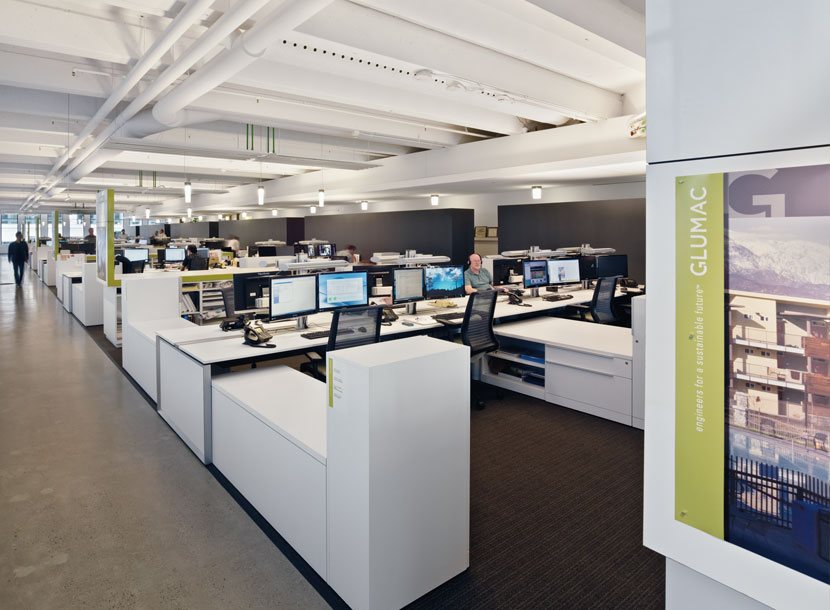
We don't have the opportunity or space to give everyone their own dedicated office, and cubicles I'm sure would be a living hell. I've looking into draping fabric from the ceiling, but you'd be surprised how challenging the logistics of setting something like that is (there are very few products in the market to support fabric like this, and we can't drape them from the drop ceiling due to weight). I've looked into free standing walls, but they tend not to have the sound absorption that is typically desired.
I'd like, for once, to read an article about practical solutions to this problem rather than just another person complaining about open office spaces thinking they've stumbled upon some undiscovered idea.