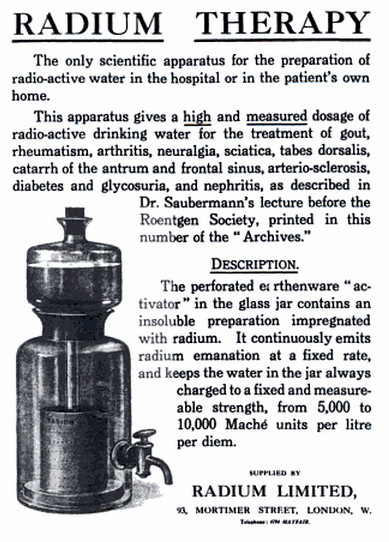
And yet, for a while now, the general "scientific consensus" has been "fat is bad for you", while recently it seems to be changing to "wait, fat isn't as terrible for you as we though, and could actually be quite healthy". I'm pretty sure the "fat is bad for you" stuff wasn't just science headlines in a newspaper for the past however many years. This is the main thing that he is talking about, where something makes into the mainline, including doctors telling people how to eat and live, and then suddenly people realize they had it all wrong and that what has been prescribed for years is actually very bad for you. Like cigarettes back in the day, (or even radiation and coke!) and fatty food now.
EDIT: references for claims about cigarettes[0], radiation[1], and coke[2] being said as good for you (though I think I may have exaggerated about doctors recommending coke)
> And yet, for a while now, the general "scientific consensus" has been "fat is bad for you",
No, it hasn't.
The general scientific consensus may have been that most Americans are consuming fat in general, and certain varieties of fat in particular, at levels which are unhealthy, and therefore that most Americans would be better off reducing fat intake in general, and certain common varieties of fat intake in particular.
It may be that many people have overgeneralized this scientific consensus into a popular misunderstanding of "fat = bad", but that, again, is mistaking popular view (and the mass marketing of "low fat" products) with scientific consensus.
>>The general scientific consensus may have been that most Americans are consuming fat in general, and certain varieties of fat in particular, at levels which are unhealthy, and therefore that most Americans would be better off reducing fat intake in general, and certain common varieties of fat intake in particular.
Unfortunately, Ancel Keys etc were recommending vegetable based fats over animal ones, and ironically it's the animal based fats that tend to be healthier. They were also recommending that a lot of the fat in the diet be replaced by carbohydrate sources, which caused its own issues.
>and ironically it's the animal based fats that tend to be healthier
Got any sources to back up that claim?
The Yerushalmy and Hilleboe paper is usually the study that people quote when they try to debunk Ancel Keys. In that study, they show that there is a distinct correlation between fat as a percent of total calories and heart disease. And they show that animal fat is more highly correlated than other types of fat. (That paper said that Ancel Keys screwed up on methodology, and they re-did with proper methods and found essentially the same result)
Big thing to keep in mind is that the data showed (and still shows) a distinct correlation between animal fat and heart disease. One theory suggests that the true cause is simply how wealthy a given nation is. i.e., wealthier nations eat more animal fat, and wealthier nations have better health care which prevents other types of deaths.
And this has been shown to be unproven, right? That was all over this forum a month ago - thousands of studies and no smoking gun. Fat isn't bad; obesity is bad.
On the specific issue of saturated fat and heart disease (saturated fat isn't the only problem fat -- trans fats are also an issue), its been shown to be more complicated than earlier thought; there's pretty strong evidence that certain high-saturated-fat foodstuffs are associated with higher risk of heart disease, but some large scale studies that seem to indicate that saturated fats overall do not appear to be (and there is some indication that certain saturated fats may actually be beneficial to an extent.)
But you've given away Scott's point. We've been listening to how bad saturated fat is for my entire lifetime pounded into the public with the maximum volume science has available to it at the highest governmental and science authority levels, and now, oops, mea culpa, it's more complicated than we thought, and right now it's not exactly out of the question that "saturated fat" will be entirely removed from the "bad thing" or even "consumed too much by Americans" column in another 10 to 20 years.
No matter how upset you get about people being a bit glib about what the consensus said (and frankly I'm not sure I couldn't establish "science said saturated fat is bad, full stop" with just a bit more effort than I'm willing to put in right now), you can't get out of the fact that the pounding was apparently unjustified, and there's a nontrivial chance it was flat-out wrong. Science and scientists shouldn't expect to escape from those decades of being wrong at maximum volume and the corresponding vicious evils inflicted on the world (because after all the US consensus has been exported all over the world), and it would be utterly and completely irrational for me not to update my beliefs based on this evidence.
Further one doesn't need to look very hard to find "proof" that the "fat = bad" message is prevalent in society.
Go to the grocery store. Go to the dairy isle. Look at the various products. If you can't find "low fat" or "light" versions of most of things there, I would be dumbfounded.
If major corporations have picked up on the "low fat" movement then I think it's fairly safe to say that it's prevalent in society.
The whole reason trans fats were invented or added to food is that food manufacturers needed a hard fat with the properties of animal fat that came from a vegetable source. The reason for that is scientists claiming that animal fat was bad for you.
No, actually, trans-fat heavy vegetable-based fat products were invented for cost reasons around three-quarters of a century before saturated fat concerns began, and saw a big upswing in popularity in the early post-WWII period more than a decade before the research indicating that saturated fats were potentially a heart-health risk factor.
Its true that once the health concerns about saturated fats first started appearing, the marketing of margarine and related products leveraged it to imply that there product was more healthy, but that's not why those products were invented.
The scientific consensus was worse than "fat is bad for you", it was saturated fat is bad, so switch from butter to trans fat loaded margarine. It lead to things like McDonalds using hydrogenated vegetable oil instead of saturated fat laden beef tallow in their fryers. The scientific consensus was specifically wrong on the types of fat that were bad.
> The scientific consensus was worse than "fat is bad for you", it was saturated fat is bad, so switch from butter to trans fat loaded margarine.
That recommendation was never "the scientific consensus" -- for most of the time after saturated fat was identified as a concern and before trans fats were identified as a specific concern, the scientific consensus was that the best change was to eliminate the saturated fats and not replace them, since most people that were getting too much saturated fats were also getting too many calories and too much of their intake in the form of fat of any kind.
Obviously, marketers of alternative fat products had a different viewpoint.
And, actually, the scientific consensus still seems to mostly be that saturated fat is bad from a cardiovascular disease perspective, what has mostly evolved is that trans fats and carbohydrates as replacements now appear to be equally bad, and the value of monounsaturated fats as replacements is unclear -- studies focusing on replacement show that replacing saturated fats with polyunsatured fats generally is beneficial. There's also some reason to think that more research is needed on particular kinds of saturated fats, and that there may be significant differences between them (milk fat may be beneficial, for instance.)
Insufficient evidence (≤2 criteria) of association is present for intake of supplementary vitamin E and ascorbic acid (vitamin C); saturated and polyunsaturated fatty acids; total fat;
Reduced or modified dietary fat for preventing cardiovascular disease
I have a parent who was a dietician. I can tell you that for at least 35 years the scientific consensus has been that some fats are good for you. Every time a new fad diet rolled through the news headlines I would get a lecture about how stupid the new fad was and how to properly eat a healthy diet.
If you believe the headlines, however, you'd never know that the science hasn't changed.